









Abstract submission deadline: February 15, 2026

In recent years, artificial intelligence (AI) has demonstrated revolutionary potential in many sectors, and animal science is no exception. The organization of the second AI4animal science conference dedicated to this topic arises from the need to explore and leverage the opportunities offered by AI to improve efficiency, sustainability, and health and welfare in animal production. It is now well known that AI provides advanced tools to monitor and manage livestock farming activities more precisely and promptly. The analysis of data collected through sensors, IoT devices, and other technologies allows optimizing the nutrition, health, and welfare of animals, reducing waste and operational costs. One of the main challenges of modern agriculture is, to reduce environmental impact. AI can transform these challenges into opportunities through advanced data-analysis and decision support that minimize the use of natural resources and improve waste management, while simultaneously promoting more sustainable and environmentally friendly practices.
This 2-day conference, organized by EAAP, ILVO, KU-Leuven and the University of Gent will offer a unique opportunity to showcase and discuss the newest developments in the field of AI for animal science. Through the scientific sessions, we aim to bring together researchers in AI for animal science, but also animal scientists, industry stakeholders and livestock sector partners with an interest in the future potential of AI in livestock farming. Focus will be on raising awareness of the importance and practical applications, but also challenges, of AI in animal husbandry. Through parallel scientific sessions and a plenary session, participants will be able to discuss and deepen their fundamental and applied knowledge and skills. It is well known that integrating AI into animal husbandry requires collaboration between different disciplines, including engineering, data science, computer science, biology, and, of course, animal husbandry. The AI4animal science conference represents an ideal platform to facilitate the exchange of ideas and collaboration among experts from various fields, promoting an integrated and multidisciplinary approach.
In conclusion, the organization of the AI4animal science conference addresses the need to tackle current and future challenges in animal husbandry through the adoption of advanced technologies. AI has the potential to profoundly transform the sector, improving efficiency, sustainability, and animal welfare, and the workshop aims to be the starting point for this transformation.
Wednesday 4th June 2025 - 14:00 - 18:00
Session A: Ethics and Industry Adoption of AI in Animal Science: Addressing practical implications and challenges, including bias and data ownership, as well as industry implementations of AI
Session B: Emerging AI Applications in Precision Livestock Farming: Innovations in generative AI, digital twins, large language models (LLMs), big data, and robotics
Thursday 5th June 2025 - 09:00 - 13:00
Plenary Session
Invited Speakers:
AI-Driven Pathways for Intelligent Disease Diagnosis in Livestock Animals
China Agricultural University (China)
Intelligent Control and Robotics for Precision Livestock Farming
Wageningen University (Netherlands)
Thursday 5th June 2025 - 14:00 - 18:00
Session C: Advancements in Data Collection and Integration: Exploring cutting-edge sensors, multi-sensor systems, data labelling, and tools driving animal science innovation
Session D: Efficient AI Modeling and Data Processing: Tools, algorithms, and workflows for scalable AI solutions
Friday 6th June 2025 - 09:00 - 13:00
Session E: Advancing Digital Biomarkers with AI: Breakthroughs in animal identification, health and welfare monitoring, behavior analysis, and remote sensing technologies
Session F: AI for Research and Farm Management: Leveraging AI to address research challenges in various animal science disciplines and improve informed decision-making
IDELE (France)
University of Georgia (United States)
Utrecht University (Netherlands)
City University of Hong Kong - CityU (China)
Agroscope (Switzerland)
Vetmeduni (Austria)
ETH Zurich (Switzerland)
UW-Madison (United States)
ILVO (Belgium)
Research Institute of Animal Science, HAO-Demeter (Greece)
ILVO (Belgium)
ETH Zurich (Switzerland)
Natural Resources Institute Finland - Luke (Finland)
You can easily find here a list of hotels and accommodations in the heart of Zurich, as well as near ETH Zurich campus where the workshop will be held. Enjoy convenient options for combining both business and leisure days in this vibrant city.
To provide the best experiences, we use technologies such as cookies to store and/or access information on the device. Consent to these technologies will allow us to process data such as browsing behavior or unique IDs on this site. Not consenting or withdrawing consent may negatively affect some features and functions.
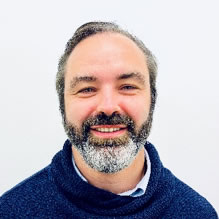
Tomás Norton is an agricultural engineer specialising in Sustainable Precision Livestock Farming (PLF). He is an associate professor at KU Leuven with a Ph.D. in Biosystems Engineering from University College Dublin. He is a Fellow of Institute of Agricultural Engineers, the International Academy of Agricultural and Biosystems Engineers, and the Royal Society of Biology. He teaches modelling of biosystems and sustainable PLF, and leads a research team focusing on PLF technology development for data-driven monitoring and management of farm animal behaviour, health and welfare. He serves in editorial and professional society leadership roles to serve the research community and advance the science in precision livestock farming.
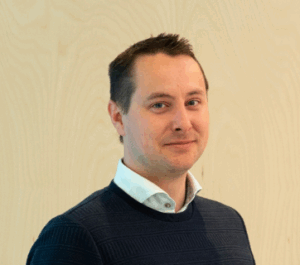
Jeroen Degroote is an Assistant Professor at Ghent University, Belgium, where he leads the monogastric nutrition research team within the Laboratory for Animal Nutrition and Animal Product Quality (LANUPRO). He obtained his Ph.D. in Bioscience Engineering in 2019 with a dissertation on the digestive physiology of weaned piglets. His current research combines expertise in digestive physiology in pigs and poultry with data science. More specifically, his team focuses on integrating monitoring systems such as electronic feeders, weighing devices, wearable sensors, and computer vision with mechanistic and data-driven models to refine nutritional models, aiming to improve nutrient utilization and enhance animal health and welfare. This includes experimental work with weaned piglets and studies with heat stressed broilers. Degroote teaches courses in pig and poultry nutrition, animal production systems, and precision livestock farming.

Matti Pastell is a Research professor in Future Farming technologies in the Natural Resources Institute Finland (Luke). He has been working on AI in agriculture and precision livestock farming applications for over 15 years. He is working on sensor-based welfare assessment of dairy cattle, sensor-based phenotyping and developing digital twins of farming systems. He is currently coordinating the case studies of the Digi4Live project https://digi4live.eu/ .

Jarissa Maselyne is coordinating the Precision Livestock Farming (PLF) research group of ILVO (Flanders research institute for Agriculture, Fisheries and Food, Belgium). She is also President of the PLF-commission at EAAP and editor for the journal Animal.
She is a Master of Science in Electromechanical Engineering (Ghent University), and PhD graduate in Bioscience Engineering (KU Leuven & ILVO).
Jarissa has been involved in several H2020 projects related to Internet of Things (IOF2020), High Performance Computing (CYBELE) and Renewable Energy (RES4LIVE) for livestock farming. She is coordinating the Horizon Europe project aWISH and the national VLAIO project PigID with her team. aWISH deals with large-scale automated animal welfare monitoring of broilers and pigs through novel sensors and AI algorithms at the slaughterhouse, to measure welfare indicators tracing back to the farm, catching, transport and slaughter process itself. PigID is focused on helping pig farmers start with electronic identification and quantifying the added value of individual pig management. Other running projects include XGain, PIGWEB, EU-LI-PHE, agrifoodTEF, digital twin for pigs, etc. The PLF team at ILVO thus deals with topics from research over innovation to industry adoption, and from sensors over AI and digital twins to informed decision making for farmers and other stakeholders.

Mutian Niu is an Assistant Professor of Animal Nutrition at the Institute of Agricultural Sciences, ETH Zurich, since June 2021, following prior appointments at the University of Pennsylvania and Farmer’s Business Network, Inc. His research is dedicated to advancing sustainable animal agriculture, with a focus on ruminant nutrition, mitigation of greenhouse gas emissions, nitrogen utilization efficiency, data science applications, and precision livestock farming.
At ETH Zurich, he oversees a comprehensive mentorship program, supervising postdoctoral researchers, doctoral candidates, and Master’s and Bachelor’s thesis projects in areas such as methane mitigation, nutrient efficiency, and development of technilogies to monitor and improve animal welfare.

Dr. Cabrera combines applied research, interdisciplinary approaches, and participatory methods to deliver practical, data-driven, user-friendly, and scientific decision support tools for dairy farm management. These scientific tools are improving dairy farm profitability, environmental stewardship, and long-term sustainability. Dr. Cabrera’s research and extension programs have a global impact. Dr. Cabrera and his workgroup have developed 50 decision support tools, published 100+ refereed articles, and 12 book chapters. Dr. Cabrera has presented in 100+ scientific sessions, and given extension talks in 400+ extension meetings in Wisconsin, other States, and around the world. Dr. Cabrera’s work in the past 15 years has been pivotal to attract $5.5+ million to support his research and extension initiatives. Dr. Cabrera has been distinguished with the Excellence in International Activities Award from the College of Agricultural and Life Sciences, University of Wisconsin-Madison, the American Dairy Science Association DeLaval Dairy Extension Award, the University of Wisconsin-Madison Vilas Faculty Mid-Career Investigator Award, the Second Mile Extension award of the Wisconsin Association of County Agricultural Agents, the Pound Extension Award from the University of Wisconsin-Madison College of Agriculture and Life Sciences, the Distinguished Achievement Award from the University of Florida School of Natural Resources and Environment, the Foundation Scholar Award in Dairy Production from the American Dairy Science Association, and the Alfred Toepfer Faculty Fellow Award from the University of Wisconsin-Madison.

Mona Giersberg is Associate Professor and coordinator of the AI & Animal Welfare Lab at Utrecht University, the Netherlands. Her research is located at the crossroads of (animal) welfare, sensor-based and precision livestock farming (PLF), and ethics. As a researcher she realized that many animal-related societal issues are too complex to be tackled by the methods of animal science alone. Giersberg sought collaboration with working groups in the fields of humanities and social sciences and expanded her methodologies to include various empirical and non-empirical approaches from these disciplines. Currently, she works on a systematic and strategic approach to transdisciplinary collaboration in the area of responsible AI for animal welfare. Giersberg holds a PhD on the topic of biometric data of farm animals and computer-based techniques to collect these. It was defended with honors and received several awards. Before moving to Utrecht, Giersberg worked as a researcher at Wageningen University and Research (NL) and at the University of Veterinary Medicine Hannover, Foundation (DE).

Dr. Kai LIU is an Assistant Professor specializing in precision livestock farming and animal behaviour and welfare at the Jockey Club College of Veterinary Medicine and Life Sciences, City University of Hong Kong (Hong Kong SAR, China). He earned his PhD in Agricultural and Biological Engineering (Animal Production Systems Engineering) from Iowa State University (USA) and a bachelor’s degree in Biosystems Engineering from Zhejiang University (China). In 2018, he embarked on a postdoctoral research position at the Swine Teaching and Research Center at the University of Pennsylvania (USA). As an agricultural and biological engineer deeply committed to animal agriculture, he is dedicated to applying innovative engineering strategies and data-driven solutions to address global challenges in food animal production and sustainability, with a keen emphasis on the ever-growing issues related to animal welfare and behaviour. His scholarly efforts have resulted in the publication of 38 papers in esteemed SCI journals. Recognized for his contributions, he was honoured as part of the 2019 Class “New Faces of ASABE – Professionals” by the American Society of Agricultural and Biological Engineers. Since May 2022, he has served as an associate Editor at Computers and Electronics in Agriculture. He is also a board member of China Animal Agriculture Association.

Clément Allain is an agricultural engineer specializing in animal production science (INP – ENSAT, 2006). Since 2010, he has served as an R&D project manager and research engineer in the field of precision livestock farming. Over the years, Clément has actively contributed to several national and European projects focused on digital technologies in Livestock farming. His current research interests include precision livestock farming and digitalization, the economic and sociological impacts of new technologies on farms, as well as innovations in 3D imaging, computer vision, and artificial intelligence.

Secretary-General for both the European Federation of Animal Science (EAAP) and the World Association for Animal Production (WAAP).
Andrea holds degrees in Animal Sciences from the University of Perugia (Italy) and advanced qualifications, including an M.Sc. and Ph.D. in Animal Genetics from the University of Nebraska (USA). He began his career at the Italian Association of Animal Breeders, later becoming National Technical Manager. He also led the International Committee for Animal Recording (ICAR) for 11 years. Andrea has coordinated two EU-funded research projects and contributed to over 20 others. He co-founded four animal science journals and has lectured in over 40 countries. He is also author of numerous research articles and dissemination pieces, in addition to writing book chapters centered on animal science. His work spans animal production, genetics, and sustainability, with a strong focus on global collaboration.

EAAP Senior EU project manager
I have worked for public (National Research Council of Italy, European Commission, Ministry of University and Research) and private (Sapienza Innovazione, IPI) organizations. I have a long experience in managing international projects (7 EU projects, both in FP7 and Horizon 2020 coordinated), as well as in disseminating and exploiting project results. Within EAAP, I am responsible for the EU project Unit, which has been involved in 13 EU projects, mainly in charge of the project communication and dissemination activities.